

A dilapidations claim is one of the most common — and most financially significant — disputes that arise at the end of a commercial lease. For landlords, it is a route to recovering the cost of returning a property to the condition required under the lease. For tenants, it can arrive as a considerable and unexpected bill in the final months of a tenancy.
Understanding how a dilapidations claim works, what landlords are actually entitled to recover, and what tenants can do to defend their position is essential for both parties — ideally long before the lease comes to an end.
What is a dilapidations claim?
Dilapidations are the breaches of a tenant’s repairing, decorating, reinstatement, and statutory compliance obligations under a commercial lease. A dilapidations claim is the mechanism by which a landlord seeks to recover either the cost of carrying out the remedial works themselves, or compensation representing the loss in value to their property caused by those breaches.
Claims can be made at different points during a tenancy. An interim dilapidations claim can be made during the lease term where a landlord wishes to compel a tenant to carry out urgent repairs. The most significant type, however, is a terminal dilapidations claim — made at or after the end of the lease — which encompasses all outstanding obligations as the tenancy concludes.
What makes dilapidations claims complex is that what a landlord can legitimately recover depends almost entirely on the specific wording of the lease. Every commercial lease is different, and the scope of a tenant’s repairing covenant is the starting point for any assessment.
What repair obligations do commercial leases typically impose?
Most commercial leases include a repairing covenant — a clause requiring the tenant to keep the property in a specified state of repair throughout the term and to hand it back in that condition at the end. The scope of this obligation varies significantly between leases.
A full repairing and insuring (FRI) lease places the broadest obligation on the tenant. Under a full repairing covenant, the tenant may be required to put the property into good repair and keep it in that state throughout the term — regardless of its condition at the outset. This means a tenant who takes on a run-down property could, in theory, be required to hand it back in better condition than they found it.
Shorter leases, or those negotiated with a schedule of condition attached, often limit the tenant’s obligation. A schedule of condition is a photographic and written record of the property’s state at the start of the lease, which can be incorporated into the lease to restrict the tenant’s repairing obligation to maintaining the property in no worse condition than shown in that record.
The importance of understanding your repairing obligation before signing is why specialist advice on lease terms matters so much. Lease Lawyer’s lease drafting and review service helps landlords and tenants understand exactly what they are committing to — and whether the repairing covenant represents a fair and manageable obligation.
What can a landlord claim in a dilapidations claim?
A dilapidations claim can cover several categories of obligation depending on what is required under the lease. The main heads of claim are:
- Structural and cosmetic disrepair that falls below the standard required by the repairing covenant. This can include worn flooring, damaged ceilings, broken fixtures, defective services, and deterioration from lack of maintenance.
- Most leases require the tenant to redecorate at specified intervals and again in the final period of the tenancy, often the last six months, using colours and materials approved by the landlord. Failure to decorate can form part of a dilapidations claim even where the property is otherwise in reasonable condition.
- Reinstatement of alterations. Tenants often carry out alterations to suit their business needs — partition walls, additional cabling, signage, mezzanine floors, or kitchen facilities. Leases commonly require the tenant to reinstate the property to its original layout at the end of the term. Failure to do so can significantly increase tenant dilapidations liability.
- Statutory compliance. Some leases place responsibility on the tenant for statutory compliance throughout the term — including fire safety, asbestos management, electrical testing, and other health and safety obligations. Failures in this area can be included in a dilapidations claim.
- Loss of rent. Where a landlord has been unable to re-let a property while remedial works are carried out, a claim for loss of rent during the works period may also be included.
Are you approaching a dilapidations dispute?
Whether you are a landlord preparing a claim or a tenant who has received a schedule of dilapidations, early legal advice can significantly affect the outcome. Lease Lawyer's lease dispute resolution service supports both landlords and tenants through the dilapidations process. Contact our team to discuss your position.
How the schedule of dilapidations works
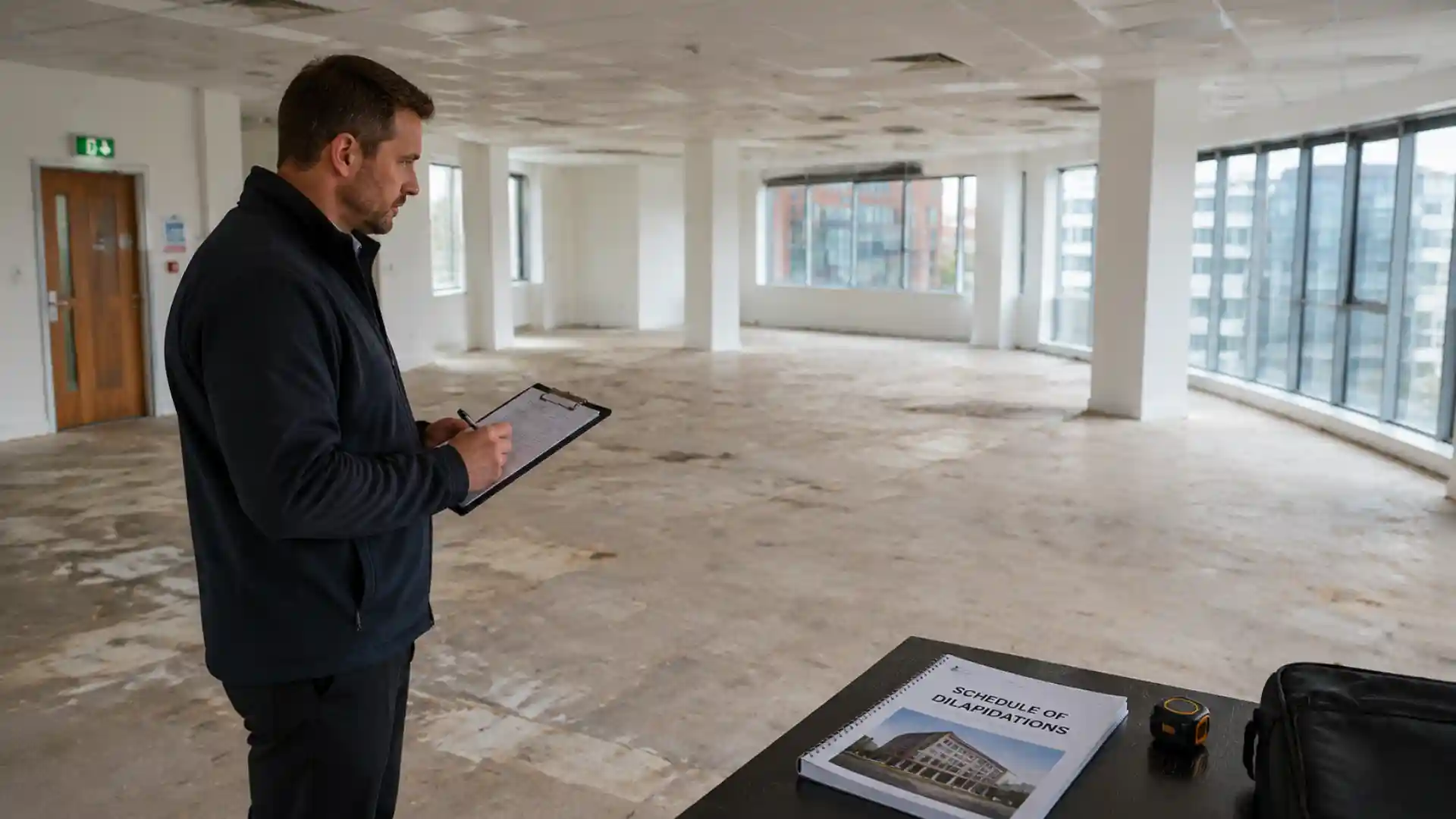
The schedule of dilapidations is the central document in any dilapidations claim. It is prepared by the landlord’s surveyor and sets out, item by item, the alleged breaches of the tenant’s lease obligations. Each item in the schedule typically identifies the specific breach, the works required to remedy it, and an estimated cost.
There are three types of schedule a landlord may serve. An interim schedule is served during the lease term and is usually focused on urgent repairs. A terminal schedule is served towards the end of the lease and covers all outstanding obligations as the end of the term approaches. A final schedule is served after the lease has ended and typically leads directly to a monetary claim, as the tenant no longer has the ability to carry out the works themselves.
Under the Dilapidations Protocol — which governs how dilapidations disputes should be managed — the landlord should serve the schedule of dilapidations within 56 days of the end of the lease. The tenant then has 56 days to respond with a Scott Schedule, which sets out the tenant’s position on each item: agreeing, disputing, or offering an alternative remedy.
Both parties are expected to negotiate in good faith, and the protocol requires them to consider alternative dispute resolution before resorting to court proceedings. Failure to follow the protocol can result in cost penalties in any subsequent litigation.
The Landlord and Tenant Act 1927: the cap on dilapidations claims
One of the most important limits on a landlord’s dilapidations claim is the statutory cap imposed by Section 18(1) of the Landlord and Tenant Act 1927. This provision states that the damages recoverable by a landlord for breach of a repairing covenant cannot exceed the amount by which the disrepair has diminished the value of the landlord’s reversionary interest in the property.
In practical terms, this means a landlord cannot automatically recover the full cost of all the works listed in a schedule of dilapidations. If the landlord intends to redevelop or substantially alter the property immediately after the tenancy ends, the disrepair may have little or no impact on the value of their interest — and the damages recoverable may be correspondingly lower, or even nominal.
The Section 18 cap is often the most critical argument available to a tenant facing a substantial dilapidations claim. Establishing that the landlord’s plans for the property mean the claimed works would not in fact increase its value can dramatically reduce tenant dilapidations liability. This requires evidence about the landlord’s intentions and often a valuation from a specialist surveyor.
The Leasehold Property (Repairs) Act 1938 provides additional protection for certain tenants. Where a commercial lease has at least three years remaining, a landlord who wishes to enforce a repairing covenant must first serve a Section 146 notice and allow the tenant to serve a counter-notice claiming the benefit of the Act. If the counter-notice is served, the landlord must apply to court for leave before proceeding — and the court may refuse that leave unless specific grounds are met. This does not apply at lease end, but it is a significant protection during the term.
Terminal dilapidations: what happens at lease end
Terminal dilapidations refers to the dilapidations claim process as it operates specifically at the end of a lease. It is at this point that tenant dilapidations liability crystallises: all outstanding repairing, decorating, reinstatement, and compliance obligations fall due simultaneously, and the landlord is able to pursue a monetary claim for all of them if the tenant has not carried out the required works.
Ideally, a landlord will serve a terminal schedule of dilapidations with enough notice — typically several months before the lease ends — to allow the tenant to carry out the works and reduce their financial exposure. If the schedule is served too late, or with insufficient time for the works to be completed, this can affect what the landlord is entitled to claim.
For tenants, the months leading up to lease expiry are the critical window. A tenant who has maintained the property well throughout the term, carried out required decoration, and reinstated any alterations is in a significantly stronger position than one who has allowed disrepair to accumulate. Getting a specialist surveyor to carry out a dilapidations review six to twelve months before lease expiry allows time to carry out any remedial works and avoid the landlord inflating costs by doing the work themselves.
How tenants can reduce their dilapidations liability
Defending against a dilapidations claim does not mean disputing everything. The most effective approaches for tenants focus on reducing liability to what is genuinely and legally owed under the lease, rather than what the landlord’s surveyor has estimated.
The key strategies tenants should consider include:
- Commission an independent surveyor’s report. The landlord’s schedule of dilapidations will inevitably be drafted in the landlord’s favour. An independent surveyor can challenge items that are disputed, argue for fair wear and tear where applicable, and provide alternative costings where the landlord’s figures are inflated.
- Invoke the Section 18 cap. If the landlord plans to redevelop or significantly alter the property, a valuation-based argument under Section 18(1) of the Landlord and Tenant Act 1927 can substantially reduce the damages recoverable.
- Use the schedule of condition. If a schedule of condition was agreed and attached to the lease at the outset, the tenant’s obligation is limited to maintaining the property in no worse condition than shown in the schedule. Items in the dilapidations claim that represent an improvement on the original condition can be challenged on this basis.
- Challenge fair wear and tear. Most leases exclude fair wear and tear from the repairing obligation. This covers deterioration that results from the ordinary use of the property over time. A tenant should not be required to pay for natural ageing that would have occurred regardless of their occupation.
- Carry out works before lease expiry. If the tenant carries out the required works themselves, they avoid the landlord recovering a more expensive contractor rate and the associated professional fees. Even partial remediation before the lease ends reduces the overall claim.
For expert support in challenging or negotiating a dilapidations claim, Lease Lawyer’s landlord and tenant disputes service provides specialist advice tailored to the specific circumstances of each case.

What landlords should do to strengthen a dilapidations claim
Landlords who take a structured approach to dilapidations from the outset of a lease are significantly better placed when a claim becomes necessary. The most important steps are:
- Commission a schedule of condition at lease commencement. This establishes a clear baseline for the property’s state at the start of the tenancy and removes ambiguity about the tenant’s repairing obligation.
- Carry out regular inspections during the term. Documented inspections give the landlord contemporaneous evidence of any developing disrepair and demonstrate that issues were not simply accumulated at the end of the lease.
- Serve a terminal schedule of dilapidations with reasonable notice. Serving the schedule early enough to allow the tenant to carry out works is both procedurally sound and more likely to result in the works being done rather than a disputed monetary claim.
- Ensure the schedule of dilapidations is accurate and well-supported. A schedule that is clearly exaggerated or poorly evidenced invites aggressive challenge and can undermine the landlord’s position in negotiations.
- Follow the Dilapidations Protocol. Non-compliance with the protocol’s timelines and requirements can result in cost sanctions in any subsequent litigation, even where the landlord’s underlying claim is valid.
Settling a dilapidations dispute without going to court
The vast majority of dilapidations claims are settled by negotiation between the parties’ surveyors and solicitors, without the need for court proceedings. The Dilapidations Protocol actively encourages settlement through alternative dispute resolution — whether mediation, expert determination, or direct negotiation — before any claim proceeds to litigation.
In practice, the final settlement figure in a dilapidations claim is almost always lower than the initial schedule of dilapidations suggested. The landlord’s surveyor’s opening position is rarely the amount that actually changes hands. The negotiation process — involving counter-schedules, Section 18 arguments, fair wear and tear concessions, and schedule of condition disputes — typically results in a figure that reflects the genuine, documented obligations under the lease.
Where parties cannot agree, the court has discretion to award costs against a party who has unreasonably refused to negotiate or failed to follow the protocol. Both landlords and tenants benefit from being seen to engage constructively, even where the dispute is genuinely contested.
Lease Lawyer advises both landlords and tenants through the full dilapidations process — from reviewing the lease terms that define liability, to negotiating the schedule of dilapidations, to representing clients in court or arbitration where necessary. Our lease terms negotiation service also advises on how to draft or negotiate repairing covenants and schedules of condition from the outset, to reduce the risk of disputes arising at all.
Need help with a dilapidations claim?
A dilapidations claim can have significant financial consequences — for landlords who fail to recover their legitimate costs, and for tenants who pay more than they legally owe. Getting the right legal and surveying advice at the right stage makes a material difference to the outcome.
Lease Lawyer advises landlords and tenants on dilapidations claims and schedule of dilapidations disputes across England and Wales. We provide clear, practical guidance on your obligations and your options — so you can approach the end of a lease with confidence.