
The forfeiture of a commercial lease is one of the most powerful legal remedies available to a landlord — and one of the most alarming situations a tenant can face. When exercised correctly, forfeiture brings a commercial lease to an immediate end and allows the landlord to recover possession of the premises. When handled badly, it can expose a landlord to serious legal risk and give the tenant grounds to challenge the entire process.
Whether you are a landlord considering forfeiture action or a tenant who has received notice that your lease may be forfeit, understanding your commercial lease forfeiture rights — and the protections available to both sides — is essential before taking any steps.
What is forfeiture of a commercial lease?
Forfeiture is a landlord’s legal right to terminate a commercial lease early and recover possession of the property when a tenant breaches the terms of that lease. It is sometimes also referred to as right of re-entry. Once forfeiture is properly exercised, the lease comes to an end and the tenant loses their right to occupy the premises.
It is important to understand that forfeiture is not an automatic right. It must be expressly provided for within the lease through a forfeiture clause. Without such a clause, a landlord cannot forfeit — even if the tenant is in serious breach. This is one of the reasons why reviewing the lease carefully before any action is so important, for both landlords and tenants.
What triggers forfeiture of a commercial lease?
The most common trigger is unpaid rent, but commercial lease forfeiture rights can also arise in a range of other circumstances where the tenant has breached their obligations. Common grounds for forfeiture include:
- Rent arrears — where the tenant has failed to pay rent on time or at all
- Persistent late payment — even where arrears are eventually cleared
- Breach of repair obligations — failing to keep the property in the required condition
- Unauthorised alterations — making changes to the premises without consent
- Unlawful subletting or assignment — transferring occupation without approval
- Prohibited use — using the property in a way not permitted under the lease
- Tenant insolvency — many modern leases include insolvency as a forfeiture trigger
Not every breach will automatically justify forfeiture. The lease wording, the severity of the breach, and the surrounding circumstances all matter. Specialist landlord and tenant dispute advice can help both landlords and tenants assess whether forfeiture is genuinely available and appropriate in a given situation.
How does a landlord exercise forfeiture?
A landlord has two routes available when exercising forfeiture of a commercial lease: peaceable re-entry, or court proceedings. The correct route depends on the nature of the breach, the circumstances of the tenancy, and the practical risks involved.
Peaceable re-entry
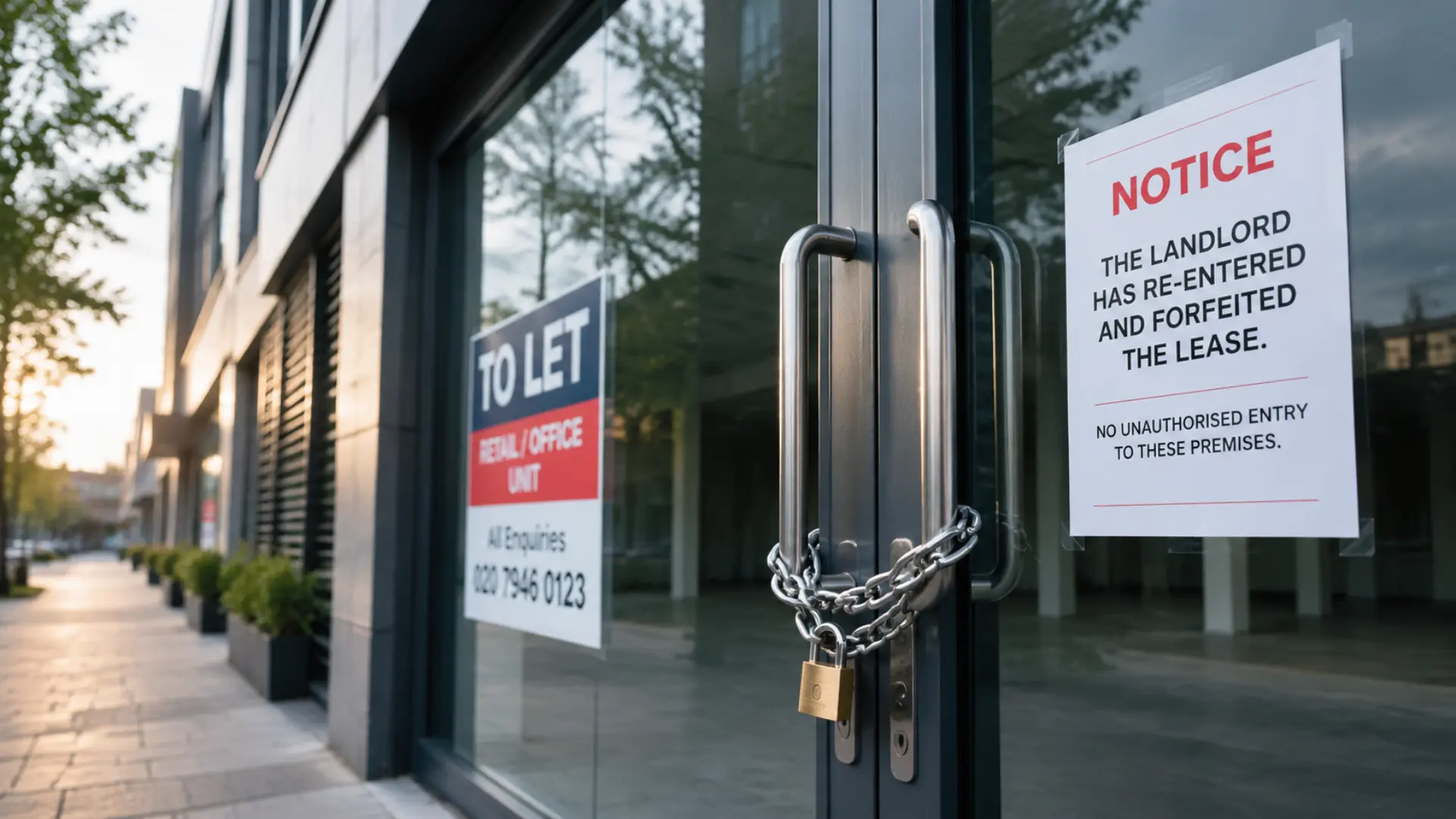
Peaceable re-entry is the process of physically retaking possession of the property — most commonly by attending outside business hours and changing the locks. The landlord must also place a clear notice on the premises confirming that the lease has been forfeited and that entry is only permitted with the landlord’s authorisation.
This route is quicker and more decisive than court proceedings, but it carries risk. Using excessive force or re-entering while someone is present and objecting can constitute a criminal offence. For this reason, many landlords instruct a certified bailiff to carry out re-entry on their behalf. Peaceable re-entry is most appropriate for commercial premises that are clearly vacant.
Court proceedings
A landlord may alternatively seek a court order for possession. This is a cleaner route where occupation status is disputed, the facts are complex, or resistance from the tenant is anticipated. Court proceedings take longer, but the order provides a clear legal basis for possession and reduces the risk of a wrongful forfeiture claim.
A critical point: if forfeiture proceedings are issued, the lease only formally terminates when the court makes an order — not when proceedings begin.

Section 146 notices: when are they required?
For any breach other than non-payment of rent, a landlord must serve a formal notice before forfeiture can be exercised. This is known as a section 146 notice, named after the Law of Property Act 1925.
A valid section 146 notice must set out the breach clearly, require the tenant to remedy it (where it is capable of remedy), and allow a reasonable period for the tenant to comply. Where monetary compensation is being sought, this must also be specified in the notice.
Section 146 notices are technical documents and must be served in the correct form and through the correct notice method specified in the lease. Technical errors — such as insufficient detail of the breach or an unreasonably short remediation period — can render the notice invalid and undermine the entire forfeiture of a commercial lease process. Getting this right first time is essential.
For non-payment of rent, a section 146 notice is generally not required. However, landlords should be aware that other procedural requirements may still apply depending on the lease wording.
The risk of waiver: a critical warning for landlords
One of the most significant pitfalls for landlords pursuing forfeiture of a commercial lease is the concept of waiver. Waiver occurs where a landlord, having become aware of a breach that would entitle them to forfeit, acts in a way that recognises the lease as continuing. If waiver occurs, the right to forfeit for that particular breach may be permanently lost.
The most common way waiver happens is by accepting rent after becoming aware of the breach. Even demanding rent — without actually receiving it — can in some circumstances constitute waiver. This makes timing critical: a landlord who discovers a breach must avoid any action that could be interpreted as accepting the continuation of the lease before they have decided whether to forfeit.
Waiver is highly fact-sensitive and the law in this area is nuanced. Landlords should seek specialist advice as soon as a breach comes to their attention and before corresponding with the tenant or accepting any payments.
Facing a forfeiture situation and not sure of your position?
Whether you are a landlord considering action or a tenant who has received a forfeiture notice, acting quickly can make a decisive difference. Speak to our commercial lease solicitors for clear and practical advice on your rights and options before any further steps are taken.
Relief from forfeiture: the tenant’s right to respond
Forfeiture of a commercial lease is not necessarily the end of the matter for a tenant. The law provides tenants with the right to apply for relief from forfeiture — a court order that reinstates the lease as if forfeiture had not occurred.
Relief from forfeiture is a discretionary remedy. The court will not grant it automatically, and a number of factors influence the outcome:
- Whether the tenant has paid or is able to pay any outstanding rent arrears
- The speed with which the tenant has applied for relief
- The nature and seriousness of the breach
- Whether the tenant acted deliberately or in bad faith
- The conduct of both parties throughout the dispute
- Whether the landlord has already granted a new lease to a third party
For rent arrears, relief is most commonly granted where the tenant pays all outstanding sums — including the landlord’s legal costs — promptly after forfeiture. For other breaches, the position is more complex. The court will weigh the relative harm to each party and consider whether reinstating the lease is proportionate.
Time is critical when it comes to relief from forfeiture. Applications by tenants should be made as quickly as possible after forfeiture. In cases where the landlord has already re-entered peaceably, a tenant typically has six months from the date of re-entry to apply — but acting earlier is always preferable.
Wrongful forfeiture: risks for landlords
If a landlord attempts to forfeit a lease without the legal right to do so — or without following the correct procedure — the tenant may bring a claim for wrongful or illegal forfeiture of a commercial lease. This can expose the landlord to significant financial liability.
A tenant who successfully establishes wrongful forfeiture may be entitled to an injunction allowing them back into occupation, as well as damages for any losses suffered as a result of being unlawfully excluded from the premises. Where a business has been forced to cease trading, those losses can be very substantial.
Common mistakes that lead to wrongful forfeiture claims include failing to check whether the lease contains a valid forfeiture clause, not serving a section 146 notice where one is required, failing to allow a reasonable time to remedy the breach, and re-entering when the tenant or their representative is present. Seeking advice before taking any enforcement action is the most effective way to protect against this risk.
Alternatives to forfeiture
Forfeiture is a powerful remedy, but it is not always the best commercial option. Before pursuing commercial lease forfeiture rights, landlords should carefully consider whether the outcome — an empty property with ongoing rates liability, security costs, and a potentially long void period — justifies the action.
In many cases, an alternative approach will produce a better result for both parties. Options worth considering include:
- Negotiation — approaching the tenant directly to agree a payment plan or revised terms
- Commercial Rent Arrears Recovery (CRAR) — a statutory process allowing landlords to seize and sell a tenant’s goods to recover unpaid rent, without court proceedings
- Drawing on a rent deposit — where one is held, this can provide immediate recovery of arrears
- Pursuing a guarantor — where the tenant has provided a personal or company guarantee
- Debt recovery proceedings — issuing a money claim in the county court for arrears owed
- Negotiated surrender — agreeing with the tenant to bring the lease to a mutually acceptable end
The right strategy depends on how much is owed, the tenant’s financial position, the quality of the premises, and the landlord’s long-term objectives. The Leasehold Advisory Service (LEASE) provides independent guidance on resolving leasehold disputes for both landlords and tenants.
What happens after forfeiture?
Once forfeiture has been successfully exercised and the lease has ended, there are several practical and legal matters a landlord will need to address:
- Business rates — the landlord becomes liable for rates on the empty property unless an exemption applies
- Buildings insurance — coverage must be reviewed to ensure the property remains adequately insured as a vacant commercial unit
- Security — arrangements should be made to secure the premises against squatters or damage
- Dilapidations — the landlord may wish to assess and pursue a claim against the former tenant for breach of repair obligations
- Land Registry — any registered entries relating to the former lease may need to be removed
- Re-letting — consideration should be given to refurbishment, marketing, and finding a new tenant
Acting swiftly on these matters limits the landlord’s exposure and helps preserve the value of the property during the void period. Our lease dispute resolution team can advise on the steps to take immediately following forfeiture.
Get expert advice on commercial lease forfeiture
The forfeiture of a commercial lease is a legally complex process with significant consequences on both sides. Landlords who act without proper advice risk losing their right to forfeit, facing wrongful forfeiture claims, or finding themselves in a worse commercial position than before. Tenants who receive forfeiture notices or face peaceable re-entry may have more options than they realise — but only if they act quickly.
Our specialist commercial lease solicitors advise landlords and tenants across England and Wales on forfeiture, relief from forfeiture, and all aspects of landlord and tenant disputes. We provide clear and practical guidance so you understand exactly where you stand and what to do next.