

A lease extension is one of the most important legal steps a tenant or leaseholder can take to protect the value and security of their property. Yet many people only consider it when the term is already running short — by which point options can become limited and costs far higher than they need to be.
Whether you hold a residential leasehold flat, a commercial premises, or a mixed-use property, understanding what a lease extension involves and when to request one can save you considerable time, money, and stress.
What is a lease extension?
A lease extension is a legal arrangement that increases the remaining term on an existing lease. It replaces the current lease with a new one — or amends it through a formal variation — to give the tenant or leaseholder a longer period of occupation or ownership.
For residential leaseholders in England and Wales, the statutory route entitles qualifying flat owners to an extension of 90 years on top of the existing remaining term, with ground rent reduced to zero. For commercial tenants, a lease extension is usually agreed informally through negotiation with the landlord, or formally through a new lease or deed of variation.
There is an important distinction worth noting: a lease extension specifically addresses the duration of the lease, while a lease variation can also amend other terms — such as repairing obligations, user clauses, or service charge provisions. In practice, the two are sometimes combined when there are outdated terms that need updating at the same time as the term is extended.
Why does the length of a lease matter so much?
Lease length affects almost every aspect of a leasehold property — its value, its mortgageability, and its attractiveness to future buyers. As the remaining term on a lease falls, the problems begin to compound.
In residential leasehold, the critical threshold is 80 years. Once a lease drops below this point, a calculation called marriage value applies, which significantly increases the cost of extending. Below 70 years, many mortgage lenders will refuse to lend against the property altogether — making it very difficult to sell or remortgage.
For commercial leases, shorter remaining terms can affect the ability to secure finance against the property, raise concerns with potential buyers or assignees, and limit the tenant’s ability to invest in improvements with any confidence of recovering that investment.
This is why understanding when to request a lease extension is essential. The longer you leave it, the more expensive and complicated the process becomes.
What does a personal guarantee on a commercial lease cover?
The scope of a personal guarantee can vary significantly depending on how the document is drafted. At its broadest, a guarantee may cover:
- All rent arrears for the full remaining term of the lease
- Service charges and insurance premiums
- Dilapidations costs — repairs and reinstatement at the end of the lease
- Legal costs incurred by the landlord in enforcing the lease
- Interest on any unpaid sums
Some guarantees are drafted as indemnities rather than simple guarantees. This is a key distinction: an indemnity is generally wider in scope and harder to challenge. Always check the precise wording of the guarantee before signing. Our specialist solicitors can review these terms in detail — professional lease drafting and review advice helps identify hidden liabilities before you commit.
When should you request a lease extension?
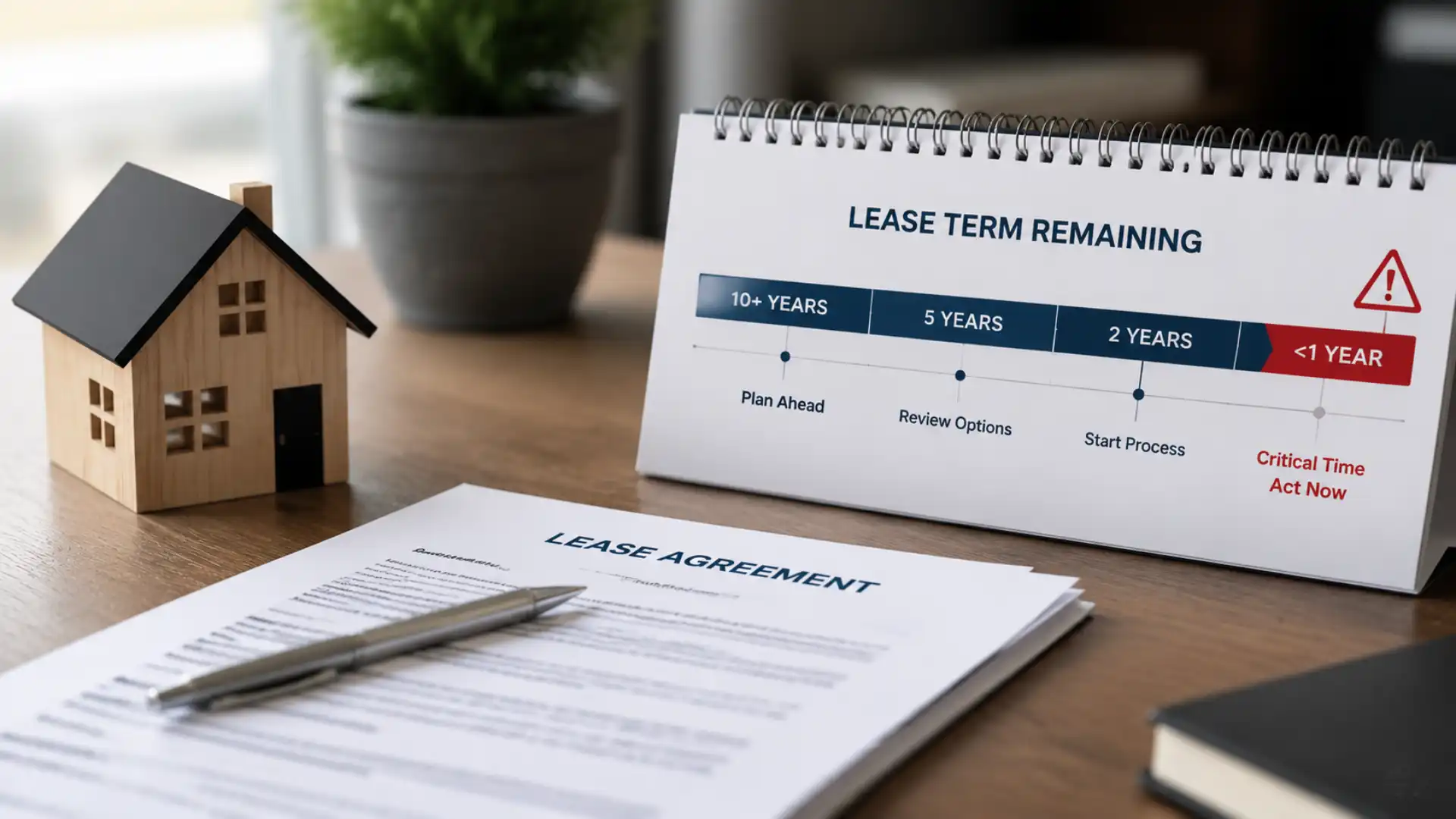
The honest answer is: as early as possible. There is no legal requirement to wait, and the longer a lease runs without extension, the higher the premium you will typically pay.
Practically speaking, the ideal time to start thinking about a lease extension is when you still have 85 to 90 years or more remaining. At this stage, the cost of extending is usually lower, the process is less complicated, and you have time to plan without pressure.
However, there are also a number of specific trigger points where requesting a lease extension becomes particularly urgent:
Approaching the 80-year mark
For residential leaseholders, the 80-year mark is the most important deadline in leasehold law. Once the lease drops below this threshold, marriage value becomes payable on top of the premium, which can add tens of thousands of pounds to the cost. Acting before you cross this line can produce very significant savings.
Before you sell
If you are planning to sell a leasehold property, potential buyers and their solicitors will examine the lease length closely. A short lease can deter buyers, reduce offers, or prevent a sale entirely. Extending before you market the property removes this barrier. Our specialist advice on lease extensions and variations can help you prepare a property for sale in the most commercially effective way.
Before a remortgage or refinancing
Most mortgage lenders require a minimum lease term remaining at the end of the mortgage period — typically at least 70 to 85 years. If your lease length could fall short of this requirement during the mortgage term, you should extend before applying. Failure to do so can result in declined applications or unfavourable terms.
When commercial lease expiry is approaching
For commercial tenants, when to request a lease extension is often linked to business planning. If your lease is within three to five years of expiry, your landlord may start to reassess rental levels or explore alternative uses for the premises. Raising the question of an extension early gives you maximum negotiating leverage and the time to properly instruct lease variation solicitors without pressure.
Thinking about extending your lease but not sure where to start?
Getting the timing and process right makes a real difference to cost and outcome. Speak to our commercial lease solicitors for straightforward guidance on your options — whether you are a tenant planning ahead or a landlord reviewing existing arrangements.
The lease extension process: informal vs formal route
How you extend a lease depends on whether you are dealing with a residential or commercial property, and the approach you choose to take.
Informal route
The informal route involves approaching the landlord directly to negotiate extended terms. This can be quicker and less costly upfront, but carries risk — particularly for residential leaseholders. An informal extension is negotiated outside of the statutory framework, which means the landlord has greater freedom to introduce unfavourable terms, retain ground rent, or offer a shorter extension than you would receive through the formal route.
Formal (statutory) route
For residential flat owners who have owned the property for at least two years, the formal statutory route under the Leasehold Reform, Housing and Urban Development Act 1993 provides the right to a 90-year extension on set legal terms. This process begins with the service of a formal notice — known as a Section 42 notice — and is tightly governed by statutory procedures and timescales. The formal route also gives you the right to apply to a property tribunal if a price cannot be agreed.
The formal route offers stronger protection, but it is essential to get the procedural steps right. Working with experienced lease variation solicitors from the outset avoids costly errors that could invalidate the notice or undermine your position.

What can be changed through a lease variation?
A lease extension and a lease variation are related but distinct. When a lease is being extended, it is often a sensible opportunity to address other terms that have become outdated, unclear, or commercially problematic.
Common areas that can be amended through a lease variation include:
- Repairing obligations — clarifying who is responsible for structural repairs and maintenance
- Service charge provisions — updating how charges are calculated, recovered, and contested
- Alterations and improvements — revising consent requirements to reflect current practice
- Assignment and subletting rights — amending restrictions to improve flexibility
- User clauses — updating permitted uses to match current or intended business activity
- Insurance provisions — modernising reinstatement and claims obligations
Each variation requires careful drafting. Poorly worded amendments can introduce new ambiguities or inadvertently weaken protections that were working well. This is why specialist lease variation solicitors carry out a thorough review of the existing lease and title position before drafting any changes. Our lease drafting and review service covers exactly this kind of detailed analysis.
What does a lease extension cost?
The cost of a lease extension varies significantly depending on several factors: the type of property (residential or commercial), the remaining lease term, the value of the property, the annual ground rent, and whether any improvements made by the tenant are factored in.
For residential flat owners, the premium payable to the freeholder is calculated using an established valuation formula. On top of this, you will also need to budget for your own solicitor and surveyor fees, as well as the freeholder’s reasonable legal and surveying costs — which you are required by law to contribute to under the statutory route.
For commercial tenants, the cost is driven by negotiation and market conditions. There is no statutory formula, so the strength of your negotiating position — including how early you raise the matter and the quality of your legal advice — directly affects the outcome.
One of the most effective ways to manage costs is to act early. The closer a lease is to the 80-year threshold (for residential) or to expiry (for commercial), the less leverage you have and the more a landlord can seek in premium or revised rental terms. Good lease term negotiation advice from the start is one of the most cost-effective investments a leaseholder can make.
What happens if you do not extend?
Failing to extend a lease when the time is right carries real consequences. For residential leaseholders, a short lease can:
- Reduce the property’s market value significantly
- Make the property unmortgageable and therefore unsellable to most buyers
- Trigger marriage value costs that make extension far more expensive
- Result in loss of the property entirely if the lease expires and is not renewed
For commercial tenants, failing to address a short lease can lead to a landlord declining to renew on favourable terms, higher rents on renewal, loss of security of tenure protections, and difficulty attracting business investment or finance secured on the lease.
If your lease is already short and you are facing difficulty agreeing terms with your landlord, the Leasehold Advisory Service (LEASE) provides independent statutory guidance and can help you understand your rights before you take further steps.
Ready to extend or vary your lease?
A lease extension is not simply an administrative task — it is a legal and financial decision that has long-term consequences for the value and security of your property. Acting at the right time, with the right guidance, puts you in the strongest possible position.
Our specialist solicitors advise landlords, tenants and leaseholders across England and Wales on all aspects of lease extensions and variations. We explain the process clearly, manage negotiations on your behalf, and ensure every document is drafted to protect your position.