
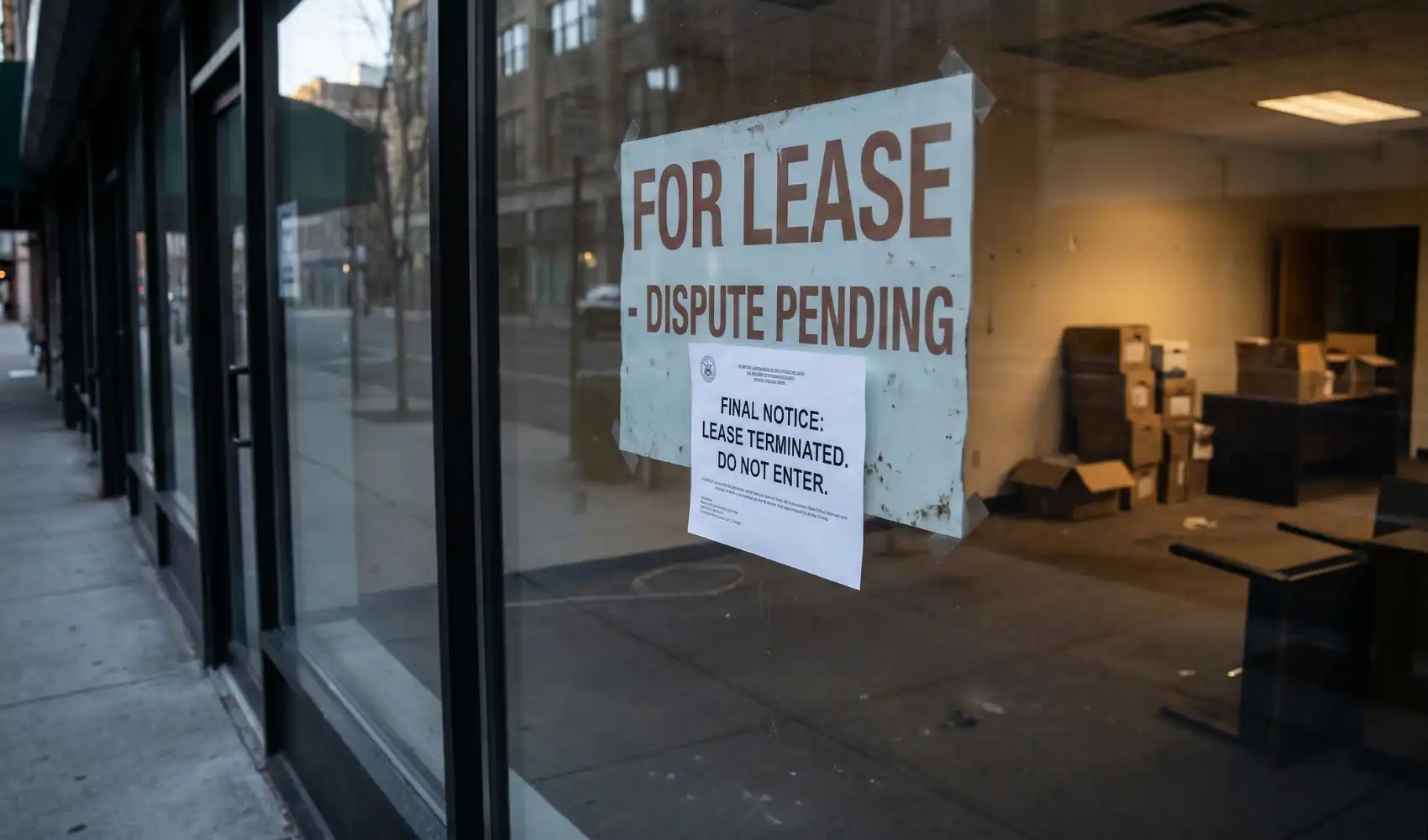
Commercial lease disputes are among the most disruptive legal challenges a business or landlord can face. They arise without warning, escalate quickly, and can be costly to resolve — particularly when the underlying lease has not been drafted or reviewed with enough care.
This guide covers the most common triggers for commercial lease disputes in England and Wales, with practical examples of how they tend to arise and, more importantly, what both landlords and tenants can do to prevent them.
What causes most commercial lease disputes?
Most commercial lease disputes do not come out of nowhere. They tend to trace back to one of a small number of recurring issues — ambiguous lease wording, failed communication, or a misunderstanding of legal obligations that only becomes apparent when something goes wrong.
Understanding where disputes tend to originate gives both parties a real advantage. The clauses most likely to generate conflict are those dealing with repairs, rent, service charges, break rights, and what happens at the end of the lease.
Repair obligations and dilapidations claims
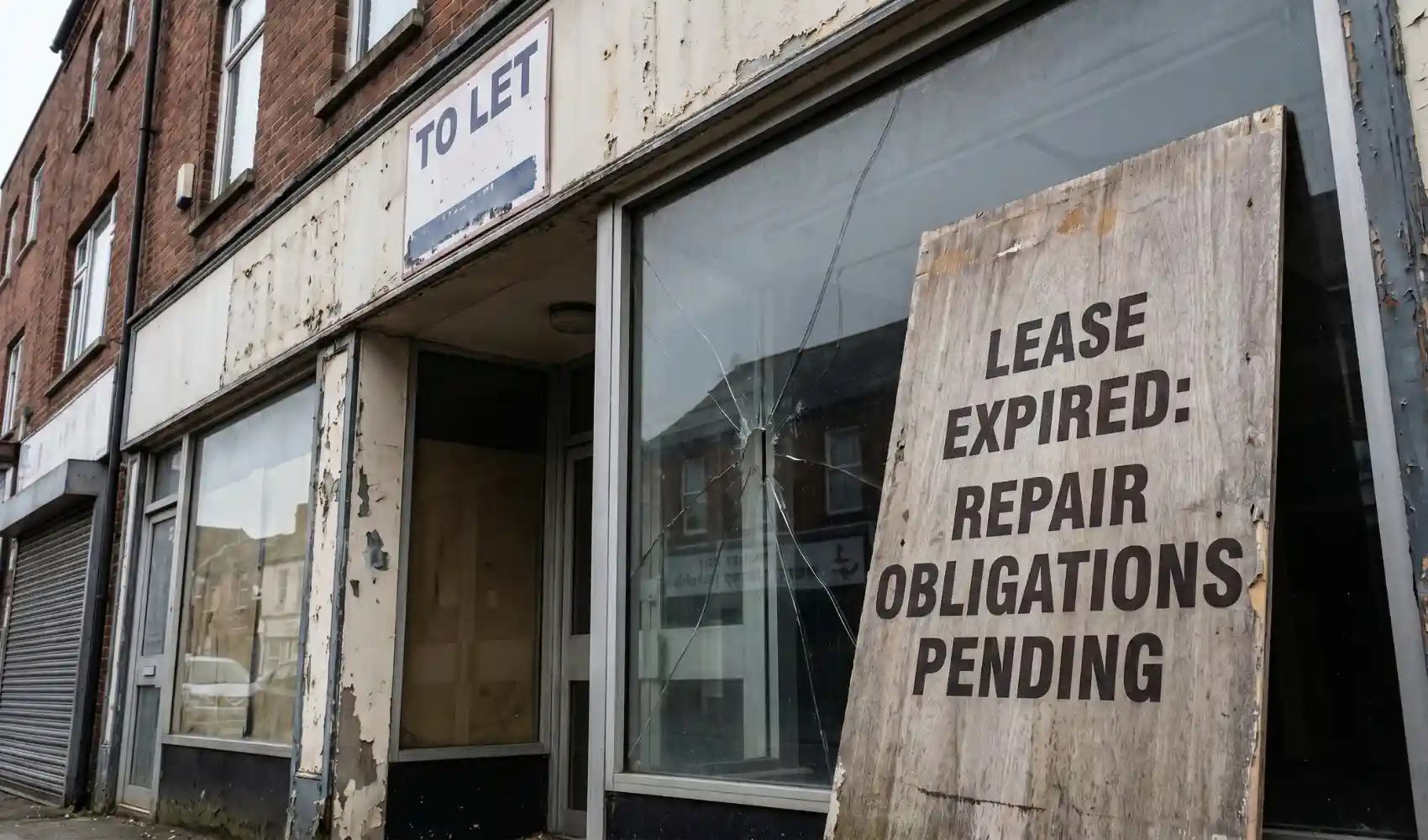
Commercial lease repair obligations are one of the most frequent sources of landlord and tenant conflict. Under a Full Repairing and Insuring (FRI) lease — the most common type in the UK commercial market — the tenant may be responsible for keeping the premises in good repair throughout the term, and returning it to that standard at the end.
The problem often surfaces at lease expiry, when the landlord serves a dilapidations claim for the cost of putting the property back into the condition required by the lease. If the tenant believed they had maintained the property adequately, and the landlord disagrees, the result is frequently a dispute running into tens of thousands of pounds.
Example
Scenario: A tenant occupies a retail unit for seven years under an FRI lease. At the end of the term, the landlord serves a terminal schedule of dilapidations claiming £85,000 for structural repairs, external repainting, and reinstatement of a partition wall the tenant removed. The tenant disputes the claim, arguing the structural issues pre-dated their occupation and the partition removal was permitted under the lease. Without a Schedule of Condition having been agreed at the outset, there is no objective baseline, and both parties face a protracted and expensive dispute.
How to avoid it:
- Agree a Schedule of Condition at the start of the lease so that the property’s existing state is documented
- Include clear wording limiting the tenant’s repair liability to keeping the property in no better condition than at the commencement date
- Seek advice on the repairing clause before signing — FRI obligations can be far broader than they appear
- Carry out interim inspections during the term to address issues before they escalate
Rent review disputes
Rent review clauses are designed to allow rent to be adjusted — usually upwards — at regular intervals during the lease. In practice, however, disputes frequently arise over how those reviews should be calculated, whether the correct procedure was followed, and what the open market rent actually is.
Many commercial leases include upward-only rent review provisions, meaning rent can increase but not decrease even if the market has moved in the tenant’s favour. If the review mechanism is poorly drafted or the parties disagree on comparable evidence, the dispute can drag on for months or years.
Example
Scenario: A landlord serves a rent review notice on a tenant occupying office space. The landlord’s surveyor values the rent at £48,000 per annum; the tenant’s surveyor values it at £31,000. The dispute turns on which comparable properties are relevant and how to apply the “hypothetical letting” assumptions in the lease. Without a clear dispute resolution mechanism written into the review clause, the parties are unable to agree on an arbitrator and face litigation.
How to avoid it:
- Ensure the rent review clause clearly sets out the valuation assumptions and disregards
- Include a built-in dispute resolution mechanism — for example, referral to an independent expert or RICS arbitration
- Take professional advice when a review notice is received — timescales and procedures matter
- Keep records of comparable lettings in the area throughout the term
Facing a potential disagreement over your commercial tenancy?
Unclear clauses and poor communication can cause standard operational matters to escalate rapidly. Speak to a lease dispute resolution solicitor before a minor disagreement turns into a costly legal conflict or jeopardises your business premises.
Service charge disputes
Where commercial premises form part of a larger building or estate, tenants are often required to contribute to the cost of maintaining shared areas through a service charge. Disputes arise when tenants challenge the amount being charged, question whether certain costs are recoverable under the lease, or allege that the landlord has not managed the building efficiently.
Service charge disputes can be particularly contentious in multi-let office buildings and retail parks, where tenants may be required to fund substantial capital expenditure at short notice.
Example
Scenario: A landlord of a mixed-use business park charges all tenants a proportion of the cost of replacing the roof on the main building. Several tenants challenge the charge, arguing it falls outside the scope of the service charge provisions in their individual leases, and that the landlord failed to consult them before commissioning the works. One tenant withholds payment entirely, triggering a formal dispute and a threat of forfeiture.
How to avoid it:
- Review the service charge clause carefully before signing — understand exactly what categories of expenditure are recoverable
- Request a service charge cap or collar provision where possible, particularly for unpredictable expenditure
- As a landlord, communicate clearly before major works and ensure expenditure falls squarely within the lease provisions
- Seek early legal advice if a service charge demand appears excessive or outside the scope of the lease
Security deposit and rent deposit disputes
Rent deposits and security deposits are commonly required by landlords at the start of a commercial lease, particularly where the tenant is a new business or cannot provide strong financial references. Disputes typically arise over the landlord’s right to draw down on the deposit, the conditions for its return at the end of the lease, and whether interest should be paid.
Example
Scenario: A tenant pays a rent deposit of £12,000 at the start of a three-year lease. At the end of the term, the landlord retains the full deposit, claiming it covers rent arrears, dilapidations, and legal costs. The tenant disputes the dilapidations element and the legal costs deduction, arguing neither is expressly permitted under the deposit deed. The parties are unable to agree, and the tenant pursues a claim for the return of the deposit.
How to avoid it:
- Read the rent deposit deed carefully — it is a separate document from the lease and governs the deposit on its own terms
- Ensure the deed is clear about when and how the landlord can make deductions, and what notice must be given
- As a tenant, document the condition of the property thoroughly at the start and end of the lease
- As a landlord, apply deposit funds strictly in accordance with the deed to avoid exposure to a counterclaim
Break clause disputes
Break clauses give one or both parties the right to terminate the lease early, typically on a specific date and subject to conditions. They are one of the most litigated areas of commercial lease law, largely because the conditions attached to exercising a break must be complied with precisely. Even minor procedural errors can invalidate the break entirely.
Example
Scenario: A tenant exercises a break clause giving six months’ notice to terminate the lease. The notice is served by first-class post rather than by the method specified in the lease — personal delivery or recorded delivery. The landlord argues the notice is invalid. The court agrees, and the tenant is bound by the lease for a further three years.
How to avoid it:
- Read the break clause and any associated conditions very carefully before serving notice
- Comply with every condition attached to the break — including clearing rent arrears and giving vacant possession
- Serve notice strictly in accordance with the method required by the lease
- Take legal advice well in advance of the break date — do not leave it to the last moment
Disputes over permitted use
Commercial leases typically restrict the use to which the premises can be put. A lease may permit use as an office, a retail unit, or a restaurant — but not as a combination of these, or for any purpose outside the specified use class. Disputes arise when a tenant seeks to change their use, or when a landlord claims the tenant is operating outside the permitted use.
These disputes can also intersect with planning law, since a change of use may require planning permission in addition to landlord consent.
Example
Scenario: A tenant occupying a unit under a lease permitting use as a café begins offering hot food takeaway deliveries, installing a commercial extraction system without consent. The landlord argues this constitutes a change of use and a breach of the repairing obligations. The tenant disputes that the use has changed and argues the extraction system falls within permitted alterations. Both parties become entrenched in their positions, and the landlord threatens forfeiture proceedings.
How to avoid it:
- Review the permitted use clause before signing and ensure it is wide enough to accommodate your business plans
- Seek landlord consent in writing before making any changes to how you use the premises
- As a landlord, clearly define the permitted use in the lease and include a change of use clause requiring written consent
Strategies for avoiding commercial lease disputes
Most commercial lease disputes are avoidable. The circumstances that tend to generate conflict — unclear obligations, absent documentation, unaddressed defects, broken communication — are all matters that good legal advice and careful lease management can address before they become problems.
The most effective dispute avoidance strategies include:
- Having the lease properly reviewed before signing, so that obligations are understood and ambiguous clauses are negotiated at the outset
- Agreeing a Schedule of Condition for commercial lease repair obligations to establish a clear baseline
- Maintaining clear written records of all communications, consents, and agreements throughout the tenancy
- Acting promptly when issues arise — delays allow positions to harden and costs to mount
- Using mediation or expert determination as an early intervention tool rather than proceeding directly to litigation
When a dispute does arise, the priority should be resolving it as efficiently as possible. Litigation in the court system is slow and expensive. Where leases include dispute resolution provisions — such as referral to an independent expert or RICS arbitration — those mechanisms should generally be used first.
Getting the right advice
Commercial lease disputes rarely get simpler with time. Whether you are a landlord dealing with a tenant in breach, a tenant facing a dilapidations claim, or either party looking to understand your position before a dispute escalates, specialist legal advice early in the process can make a significant difference to the outcome.
Our lease dispute resolution solicitors assist landlords and tenants across England and Wales with all forms of commercial lease conflict — from early-stage advice through to formal proceedings if necessary. We focus on practical, proportionate solutions that protect your interests without unnecessary cost or delay.
If you are concerned about the terms of your current lease and want to understand your exposure before a dispute arises, our landlord and tenant disputes team can review your position and advise on the steps most likely to protect your interests.
For those taking on new commercial premises, taking time to understand what a lease actually commits you to is essential. Our guide to what a commercial lease is and how it works explains the key clauses, obligations, and legal framework that govern commercial tenancies in England and Wales — and why the detail of each clause matters far more than most tenants realise when they sign.
For guidance on how commercial property law applies to landlord and tenant relationships more broadly, the Landlord and Tenant Act 1954 sets out the statutory framework underpinning security of tenure and renewal rights for commercial tenants in England and Wales.
Struggling with commercial lease disputes or unexpected claims?
Whether you are dealing with a complex terminal dilapidations assessment, a contested rent review calculation, or ambiguous terms regarding your commercial lease repair obligations, early intervention is essential. Proactive, expert evaluation can defuse escalating friction and protect your commercial interests.